What Each Service Actually Does
Ceramic coating bonds to a vehicle’s clear coat, creating a protective layer that repels water and light contamination more effectively than bare paint does on its own. It’s a surface treatment — it changes how the paint behaves against water, dirt, and some environmental contamination, and it can meaningfully enhance gloss compared to unprotected paint. What it does not do is provide meaningful physical impact protection of any kind; it isn’t a substitute for something specifically designed to absorb the force of a rock chip or similar road-debris impact.
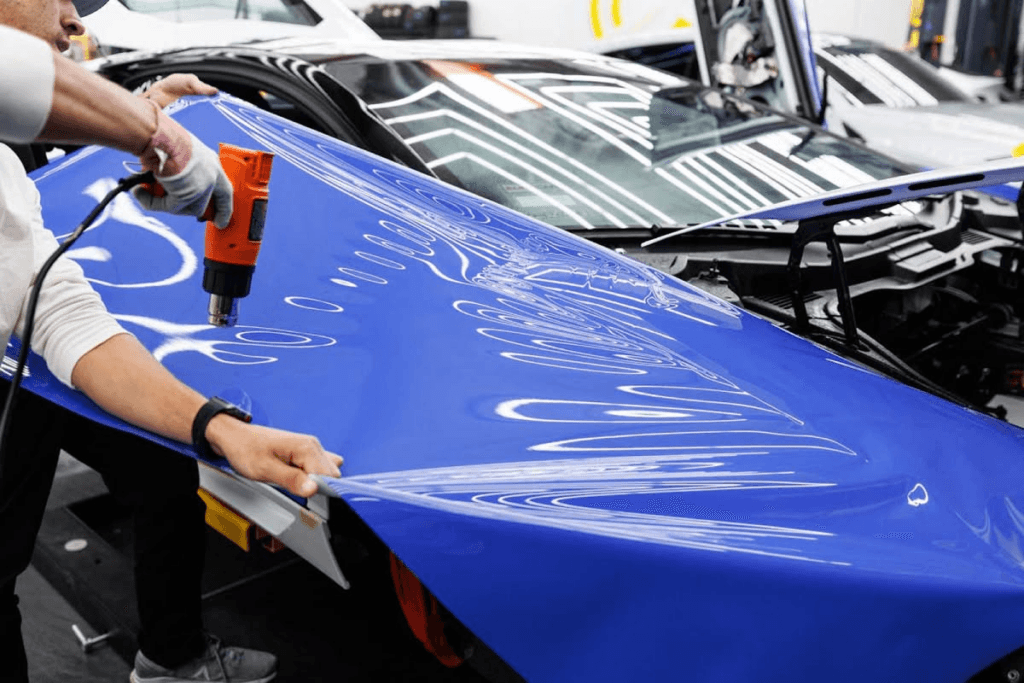
Paint protection film is a physical, typically clear film applied to specific panels — commonly the front bumper, hood, fenders, and mirrors, though coverage can extend further depending on the package chosen — designed to absorb impacts from rock chips, road debris, and minor abrasion before they reach the paint underneath. It’s a mechanical barrier rather than a surface chemistry treatment, which is the core, fundamental reason it addresses a genuinely different category of concern than coating does, even though both are frequently marketed under the broader “paint protection” umbrella.
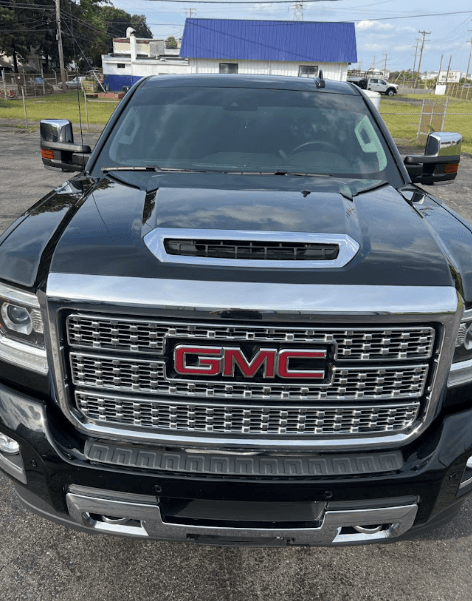
This distinction is genuinely worth sitting with for a moment, since it’s the actual foundation the rest of this decision rests on entirely. A vehicle can have perfectly glossy, well-maintained, coated paint and still pick up a rock chip on the highway the very next day — coating simply isn’t built to prevent that specific outcome. Conversely, a vehicle with PPF installed on its most exposed panels can still show water spots or accumulate stubborn contamination on uncoated surfaces, since film alone doesn’t provide the surface-behavior benefits coating is specifically designed around.
Does Ceramic Coating Stop Rock Chips?
No. Ceramic coating is not a substitute for paint protection film when physical impact protection is the primary concern. Coating is a thin, bonded layer without the thickness or material properties needed to genuinely absorb an impact from road debris — a rock kicked up on the highway reaches the paint the same way whether or not the surface is coated, since the coating’s thickness measures in microns rather than the millimeters PPF’s physical layer provides. This is worth being direct about upfront, since it’s the single most common misconception driving customers toward the wrong service for their actual concern.
Four Ownership Scenarios
Driver A: The Daily Highway Commuter
An owner who spends significant time on highways, dealing with regular exposure to road debris, gravel, and the kind of rock-chip risk that comes with sustained higher-speed driving, is generally better served by PPF on the most exposed panels first, before considering coating at all. Coating alone doesn’t address the physical impact concern that’s actually driving this owner’s worry, regardless of which coating tier or specific product is ultimately chosen — no amount of hydrophobic surface behavior changes how a rock impacts painted metal at highway speed.
This owner’s real question isn’t “which product performs better” — it’s “which category of protection actually solves my specific problem.” For a commuter putting real highway miles on a vehicle week after week, front-end PPF coverage addresses the actual risk directly, in a way that even the most advanced ceramic coating product on the market simply cannot.
Driver B: The Gloss-and-Maintenance-Focused Owner
An owner primarily interested in easier washing, better gloss retention, and general resistance to environmental contamination like tree sap and bird droppings is a strong candidate for ceramic coating specifically, rather than PPF. This owner isn’t especially concerned about rock chips — their priority is how the vehicle looks day to day and how much effort it takes to keep it that way, which is exactly the problem coating is built to address directly. For this owner, PPF’s physical impact protection would be solving a problem they don’t actually have, while coating addresses their real, stated priority.
This scenario is common among owners who drive moderate distances, park in reasonably protected areas, and simply want their vehicle to look consistently clean and glossy without constant, labor-intensive maintenance. Coating’s core value proposition — easier cleanup and better appearance retention — maps directly onto what this owner actually wants out of a protective service.
Driver C: The New or High-Value Vehicle Owner
An owner with a new or particularly valuable vehicle, wanting comprehensive protection from day one, is a reasonable candidate for combining both services — PPF on the most exposed panels for physical protection, with ceramic coating applied over the film and across the rest of the vehicle for consistent gloss and easier maintenance everywhere. This combination addresses both categories of concern rather than leaving one unaddressed, which matters more to this owner than it might to someone with a lower-value or shorter-term vehicle.
This is often the right approach for someone who’s made a significant financial investment in the vehicle itself and wants to protect that investment as comprehensively as reasonably possible from the very first day of ownership, rather than waiting until visible wear appears and then deciding what to do about it after the fact.
Driver D: The Budget- and Condition-Conscious Owner
An owner weighing budget, current paint condition, and how long they plan to keep the vehicle needs to factor in considerably more than which service sounds more comprehensive on paper. A vehicle with existing paint defects may benefit from paint correction before either service, since both coating and film preserve whatever condition exists underneath rather than genuinely improving it in any way. An owner planning shorter-term ownership may reasonably prioritize differently than one planning to keep a vehicle for a decade or more, since the value of a longer-duration investment compounds differently depending on how long you’ll actually be around to benefit from it.
For this owner specifically, the right answer often isn’t “the most protection possible” — it’s genuinely “the protection that matches my actual budget, timeline, and priorities most closely.” That might mean starting with coating alone, PPF alone on just the highest-risk panels, or delaying either service until paint condition has been properly evaluated and addressed first.
Ceramic Coating vs PPF: A Direct Comparison
| Factor | Ceramic Coating | PPF |
|---|---|---|
| Primary purpose | Surface treatment — hydrophobic behavior, gloss | Physical protection — absorbs impacts from rocks and debris |
| Rock-chip protection | Not designed for this | Its core purpose |
| Hydrophobic behavior | Core characteristic | Present to some degree, but not the primary function |
| Gloss | Can meaningfully enhance | Generally clear/low-profile, less of a gloss-enhancement focus |
| Maintenance | Makes routine washing easier | Requires its own care, including attention to film edges |
| Typical application strategy | Often applied to the entire exterior | Often applied selectively to high-exposure panels |
| Can they be combined? | Yes | Yes — coating can be applied over compatible film for combined benefits |
Can PPF and Ceramic Coating Be Combined?
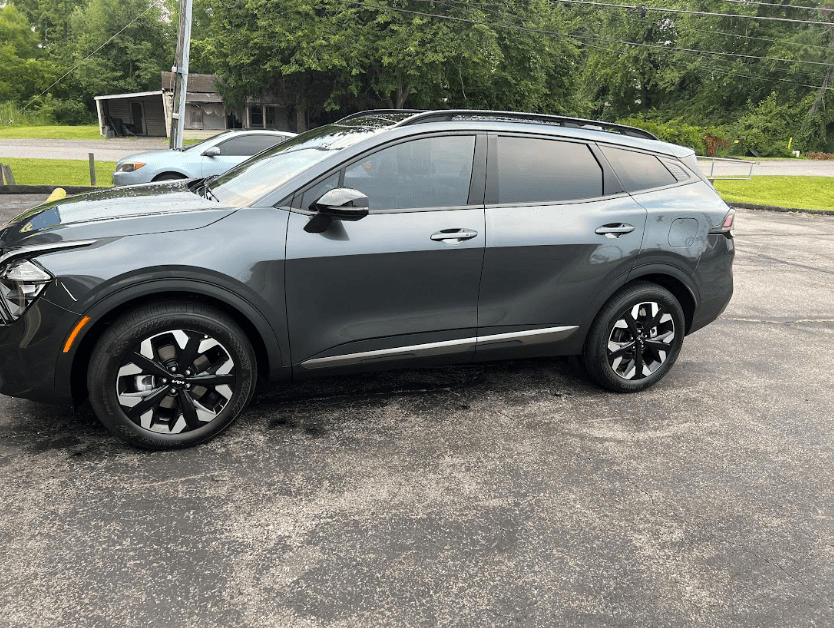
Yes. Dynamic’s PPF page itself discusses combining PPF with compatible ceramic coating or sealant protection, which genuinely reflects a common real-world approach — film for the physical protection concern on exposed panels, coating on top (and across the rest of the vehicle) for the surface-behavior and gloss benefits. This isn’t an either-or decision for every owner; it’s a genuinely reasonable strategy for someone who has both concerns and the budget available to address both simultaneously rather than choosing just one.
When these two services are combined, the practical sequencing usually matters: film gets installed first on the designated panels, and compatible coating is then applied over both the film and the remaining painted surfaces, so the entire vehicle ends up with consistent surface behavior and gloss even though only specific panels have the added physical protection underneath. Not every coating product is necessarily formulated to bond well with every specific film, which is genuinely worth confirming directly with your installer rather than assuming any combination is automatically compatible without checking first.
Paint Condition Matters Before Either Service
Regardless of which protection you choose, existing paint condition affects the outcome in a meaningful way. Both ceramic coating and PPF preserve whatever condition the paint is in at the time of application — neither one corrects existing swirl marks, scratches, or oxidation that developed before either service was applied. A vehicle with visible defects may genuinely benefit from paint correction first, since applying either protective service over unaddressed defects locks those imperfections in rather than improving them in any meaningful way, regardless of which specific product or film is ultimately chosen for the job.
This is a detail that’s easy to overlook when the conversation is framed purely as “coating vs. PPF,” since paint condition is really a separate, earlier consideration that affects the quality of the eventual result either way. A vehicle with genuinely clean paint benefits more fully and immediately from either protective service than one with existing wear that hasn’t been addressed first.
Budget and Ownership Horizon
Cost and how long you plan to keep the vehicle both reasonably factor into this decision alongside the physical-protection-versus-surface-treatment distinction covered above. An owner planning to keep a vehicle for many years may find more long-term value in combined protection than one planning a considerably shorter ownership period, simply because the investment has more time to genuinely pay off in reduced wear and easier maintenance across that longer overall timeline.
It’s also genuinely worth being honest that neither service is inherently the “premium” or “basic” option here — they’re addressing different problems at different price points, and the right combination for your specific budget depends entirely on which problem matters most to you personally, not on which option simply costs more or sounds more comprehensive when described in a sales conversation.
For the fundamentals of how these two services genuinely compare from a slightly different angle, see the fundamentals of how PPF and Ceramic Coating compare for additional foundational context. If you’re specifically wondering how long ceramic coating’s benefits actually last once applied, see how long ceramic coating actually lasts for that deeper dive. And for ongoing maintenance considerations that apply regardless of which protection you choose, routine auto detailing remains part of the picture either way.
FAQs
Does ceramic coating stop rock chips? No. Ceramic coating is not a substitute for paint protection film when physical impact protection is the primary concern — it’s a surface treatment, not a physical barrier.
Can you apply ceramic coating over PPF? Yes. This is a genuinely common combination, using film for impact protection on exposed panels and coating on top (and across the rest of the vehicle) for easier maintenance and gloss.
Which is better, ceramic coating or PPF? Neither is universally better — they solve different problems. The right choice depends on whether your primary concern is physical impact protection (PPF) or surface behavior and easier maintenance (ceramic coating).
Do I need paint correction before choosing either service? If your paint has visible defects, yes, generally. Both services preserve existing paint condition rather than correcting it, so addressing defects first tends to produce a better long-term result.
Is PPF worth it for a daily commuter? It can be, particularly for highway commuters facing regular road-debris exposure. This is exactly the ownership scenario PPF is best suited to address directly.
Does ceramic coating make PPF unnecessary? No. They address different concerns entirely — coating doesn’t provide meaningful physical impact protection, so it doesn’t substitute for what film is specifically designed to do.
How do I decide between the two if I have a limited budget? Consider which problem genuinely bothers you more — rock chips and physical damage, or washing difficulty and gloss retention — and prioritize the service that addresses that specific concern first.